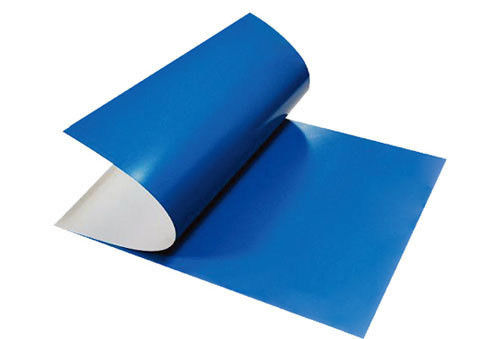
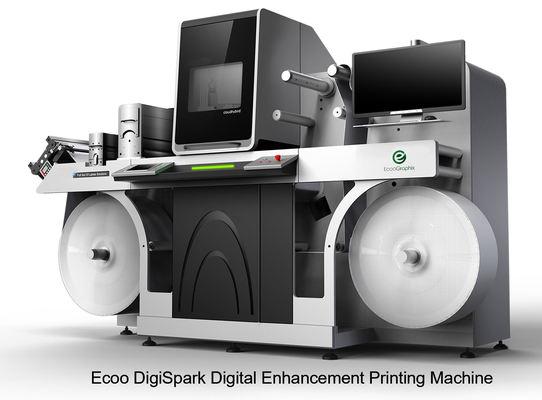
Choosing a flexo plate resolution is an application decision before it is a technology decision. The same 5080 dpi plate that delivers flawless shrink sleeves will be wasted on a kraft corrugated shipper, while a 4000 dpi plate on a premium security label will fail inspection. The matrix below maps resolution to the jobs where it earns its cost.
Application Matrix
| Application |
Typical Screen |
Recommended Resolution |
Why |
| Post-print corrugated, kraft bags | 100–120 lpi | 4000 dpi | Rough, absorbent substrate; large solids and bold type dominate |
| Industrial / logistics labels | 120–133 lpi | 4000 dpi | Barcode and bold text legibility matter more than tonal detail |
| Pressure-sensitive prime labels | 150–175 lpi | 5080 dpi | 1–2% highlights needed for skin tones and gradients |
| Shrink sleeves | 150–175 lpi | 5080–10160 dpi | Up to 40% distortion on sleeve; finer dots survive stretching |
| Flexible packaging (film) | 150–175 lpi | 5080 dpi | Balanced highlight detail and stable ink transfer on film |
| Folding cartons, premium | 175–200 lpi | 5080–10160 dpi | Coated board holds fine detail; brand owners demand photographic quality |
| Security & brand protection | 175–200+ lpi | 10160 dpi | Micro-text under 4 pt, guilloche, latent images |
Labels and Shrink Sleeves
Prime labels live or die on highlight detail: cosmetic, beverage and personal-care artwork relies on smooth transitions to bare substrate. 5080 dpi is the baseline, because 1% dots hold at 175 lpi and reverse type stays open. Shrink sleeves are the exception that justifies 10160 dpi in a label house — the film stretches during application, so any dot that is marginal on the plate becomes a visible break after shrinking. Imaging at the highest resolution gives the press operator the latitude to run a slightly lighter bump-up curve and still survive 30–40% distortion.
Flexible Packaging and Folding Cartons
On film, dot gain and ink transfer behave differently than on paper, and 5080 dpi combined with HD screening is usually sufficient — the limiting factor is the anilox and the drying tunnel, not the imager. Premium folding cartons printed on coated board are a different case: the substrate can hold 200 lpi, so converters serving premium beverage, confectionery and cosmetics brands typically keep a 10160 dpi capability for those SKUs.
Security and Brand Protection
This is the only segment where 10160 dpi is non-negotiable rather than optional. Micro-text below 4 pt, guilloche line patterns, latent images and tamper-evident marks require a 2.5 micron pixel pitch; anything coarser produces broken strokes that fail verification under a loupe. Converters in this space should plan for tighter artwork control, longer imaging cycles and stricter plate handling.
Practical Selection Rules
- Read the artwork first. If it contains photographic gradients, fine reverse type or micro-detail, 5080 dpi is the floor.
- Read the substrate second. Rough or highly absorbent stock caps achievable quality regardless of resolution.
- Add 10160 dpi only where it pays. Security, shrink sleeves and premium cartons — not across the whole catalogue.
- Keep a mixed plate inventory. Running every job at maximum resolution inflates plate spend and imaging time without improving the printed result.
Resolution is a tool for matching capability to demand. Converters who align 4000, 5080 and 10160 dpi plates to the right applications consistently achieve better print quality at lower cost than those who standardise on a single number.


 Pesan Anda harus antara 20-3.000 karakter!